Dynamics Multilingual Services · 6 min read
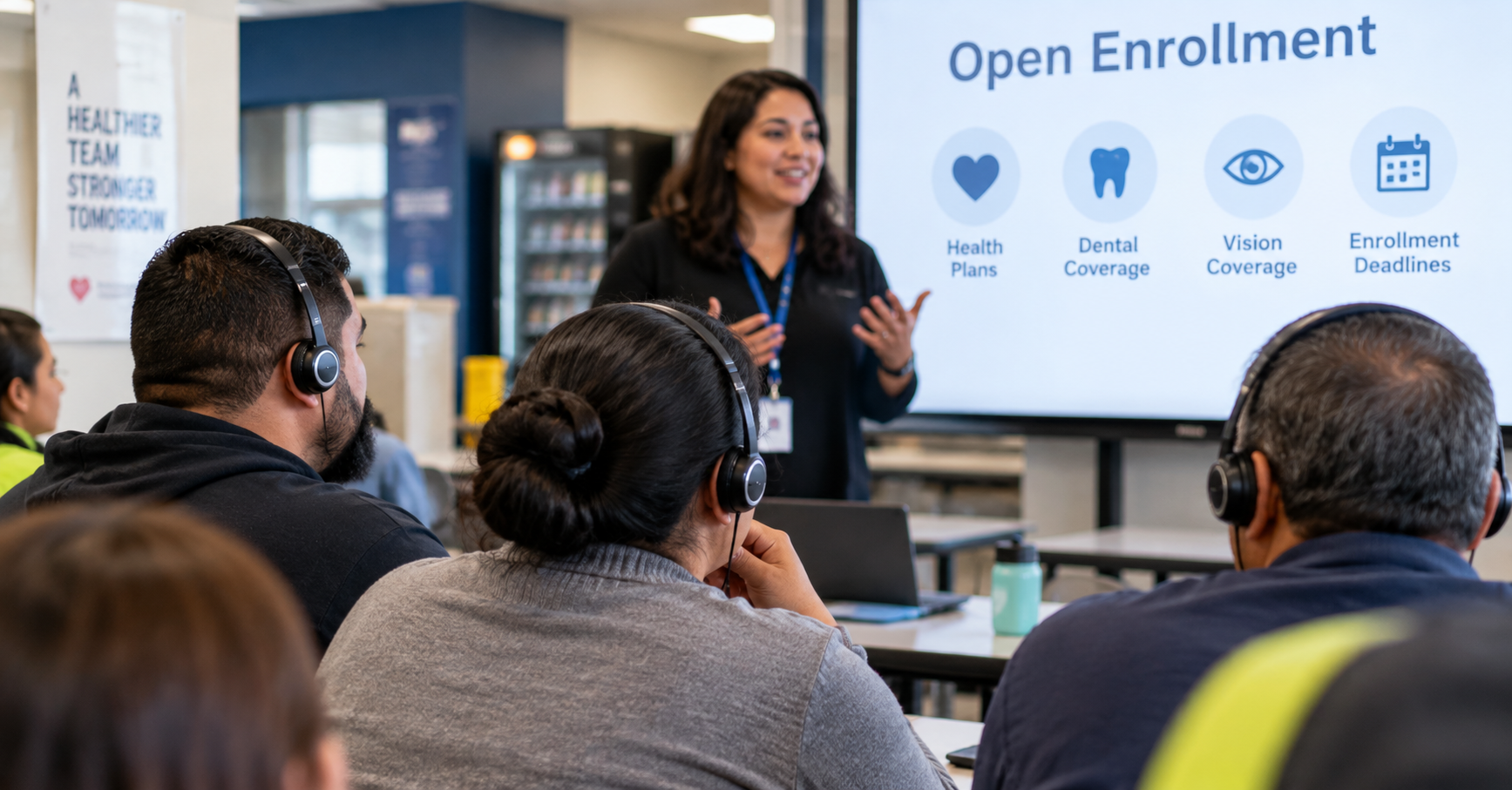
It’s open enrollment season. A benefits representative stands at the front of a breakroom or training room and walks an entire workforce through health plan options, deductibles, dental and vision coverage and enrollment deadlines, all in about an hour.
Half the room nods along. The other half catches some of it. For employees who speak Spanish or another language as their first language, that meeting may be the only chance they get to understand decisions that will affect their healthcare and their paycheck for the next 12 months.
An open enrollment interpreter makes sure that one meeting works for everyone in the room.
Why group enrollment meetings are higher stakes than they look
Benefits terminology is dense even for native English speakers. Deductibles, coinsurance, copays, out-of-pocket maximums, HSA and FSA contribution limits, plan tiers and dependent coverage all come up in a single presentation, and most of it is new to the people hearing it.
When an employee doesn’t fully follow the meeting, a few things can happen:
- They enroll in a plan that doesn’t fit their family’s needs.
- They choose a plan based on the lowest paycheck deduction without understanding the deductible.
- They miss the enrollment deadline and end up with default coverage, or no coverage at all.
- They don’t add a spouse or child they meant to cover.
Most of these choices can’t be changed until the next open enrollment unless the employee has a qualifying life event. That’s up to 12 months of consequences from one misunderstood meeting.
Who should arrange interpretation: the employer or the broker?
Both have a reason to.
For HR and employers: Your employees’ benefits are part of what you offer them. When they understand their options, they make better choices, ask fewer follow-up questions and value the benefits you’re paying for. Interpretation also cuts down on the confusion and corrections HR handles after enrollment closes.
For insurance brokers and benefits consultants: Your presentation is how clients judge the job you do. When a client has a multilingual workforce, showing up with a professional interpreter, rather than relying on a bilingual employee pulled off the floor, is a service that sets you apart. It also helps protect enrollment accuracy across your whole book of business.
The simplest approach is to settle it during meeting planning: whoever schedules the session books the interpreter, and both sides share the presentation in advance.
What good open enrollment interpretation looks like
Simultaneous interpretation for group sessions. With wireless headsets, Spanish-speaking employees follow the presentation in real time while it runs at its normal pace. No one has to wait for each slide to be repeated, and the meeting doesn’t run twice as long.
Two-way Q&A. Employees can ask questions in their own language, and the interpreter delivers them to the presenter in English. This is often where the most important clarifications happen.
One-on-one follow-up support. After the group session, many employees have plan-specific questions about their family, a medication or a doctor. Consecutive interpretation at enrollment tables or in individual meetings covers those conversations.
Translated enrollment materials. Plan comparison sheets, deadline reminders and enrollment instructions should be available in the languages your employees read. A decision this important should be reviewed carefully at home, not just heard once.
Multi-shift and multi-site coverage. Many workplaces hold several sessions across shifts or locations. Using the same interpreters at every session keeps the terminology and explanations consistent.
How to plan interpretation for your group enrollment meeting
- Count your languages early. HR usually knows which languages employees speak. Share that with your broker and interpreter as soon as meeting dates are set.
- Book before the season fills up. Open enrollment sessions tend to cluster into the same few weeks every fall, so interpreter availability tightens fast.
- Send the presentation ahead of time. An interpreter who has reviewed the slides and plan names in advance will explain benefits terms more accurately.
- Plan for every session. Include each shift, site and virtual session in the interpretation plan, not just the first one.
- Leave time for questions. Interpreted Q&A takes a little longer, and it’s where employees work out what each plan means for them.
Frequently asked questions
What type of interpretation is best for open enrollment meetings?
Simultaneous interpretation with headsets works best for group presentations, because the meeting keeps its normal length. Consecutive interpretation works well for one-on-one follow-up questions.
Can we use a bilingual employee to interpret the benefits meeting?
It’s common, but risky. Benefits terminology is technical, and a bilingual coworker may not know the right terms in both languages. Employees may also feel uncomfortable asking personal health questions in front of a coworker.
Do you provide interpretation for virtual enrollment meetings?
Yes. Platforms like Zoom have built-in interpretation features that let employees choose a Spanish audio channel during the presentation.
Can you translate our enrollment materials too?
Yes. We translate plan comparisons, enrollment guides, deadline reminders and other benefits materials so employees can review their options in their own language.
Open enrollment interpreters from DMS
Since 2007, Dynamics Multilingual Services has provided simultaneous interpretation, translation and interpretation equipment across New Jersey and New York. We own our own headsets and transmitter systems, so we can cover a single breakroom session or a full schedule of enrollment meetings across shifts and locations. We work with HR teams, insurance brokers and benefits consultants to make sure every employee understands the choices in front of them.