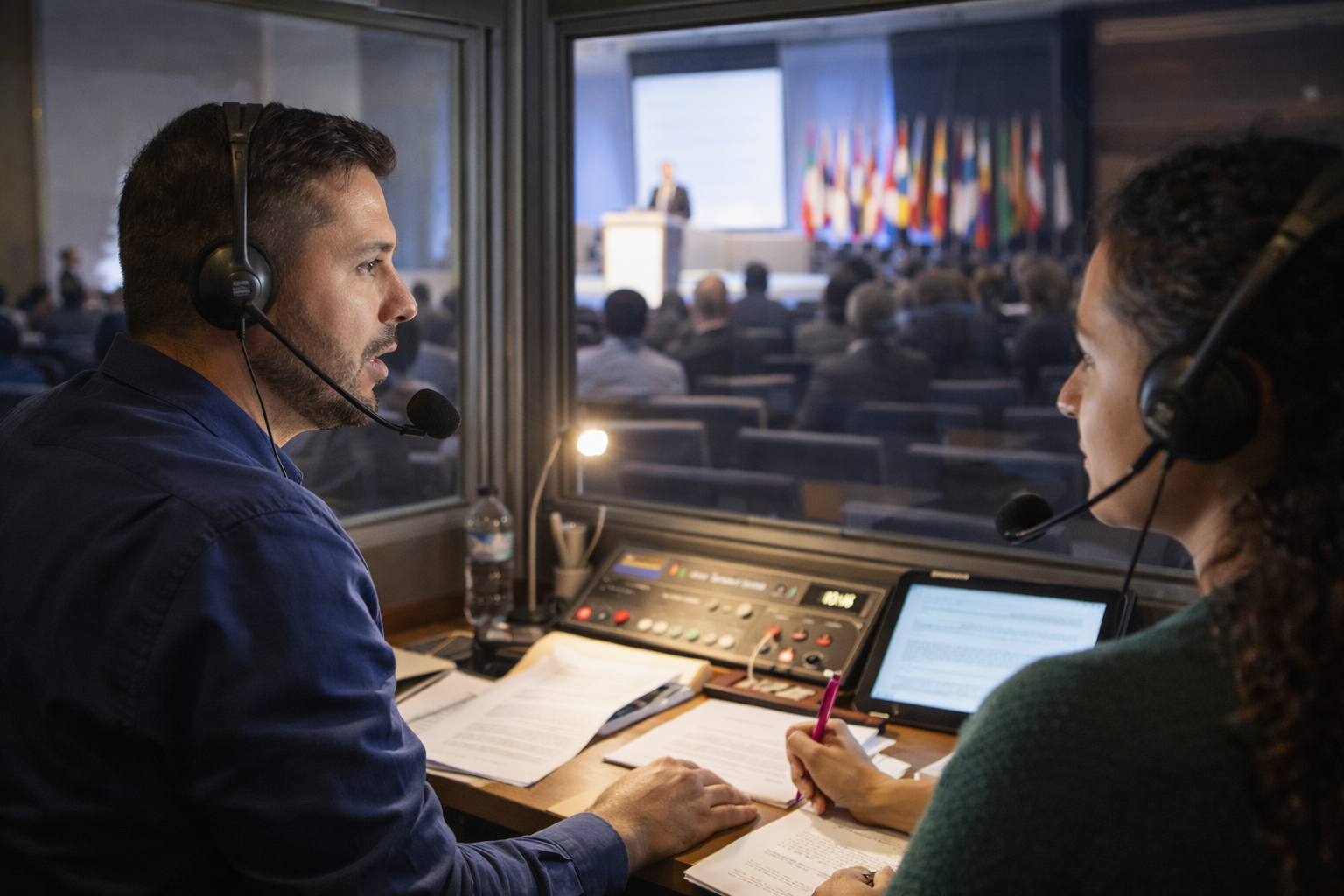
When most people walk into a conference, their attention goes straight to the speakers, the presentations, or maybe even the networking opportunities. But behind the scenes, there’s a whole other world happening in the interpreter’s booth. That’s where we’re working nonstop to make sure everyone in the room can actually understand what’s being said—no matter the language.
Interpreting at conferences is fast-paced, demanding, and honestly? Super rewarding. Here’s a peek into what a “typical” (if there even is such a thing) day looks like for a conference interpreter.
1. Prepping Before Show Time
Our work actually starts way before the conference doors open. We’re usually sent programs, speeches, or slide decks ahead of time, and trust me, we devour them. This isn’t just casual reading—it’s deep prep. We research terminology, make glossaries, and try to get familiar with the subject.
One day it might be medical technology, the next international trade, and the day after that climate policy. The only way to keep up is to be ready for anything.
2. Getting There Early (Yes, Coffee First)
Conference day usually starts early. We show up ahead of everyone else to check our booth and test the equipment. Microphones, headsets, connections—we run through everything, because once the first speaker is on stage, there’s no hitting pause.
We’ll also coordinate with the event team and AV crew. They’re basically our best friends during the day.
3. Life Inside the Booth
Once things kick off, the booth becomes its own little world. We’re listening, processing, and speaking—all at the same time. And no, it’s not about repeating words like a parrot. It’s about capturing the message, the tone, and the intent.
It’s kind of like running a mental marathon while juggling three things at once. (And yes, by the end of a session, you feel it.)
4. Why We Always Work in Pairs
Here’s something most people don’t know: conference interpreting is never a solo gig. We always work in pairs. One of us interprets for about 20–30 minutes, then we switch. While one is speaking, the other is jotting down notes, keeping track of tricky terms, and offering backup.
That teamwork is what keeps the quality consistent all day long. Without it, we’d all burn out before lunch.
5. Wrapping Up the Day
By the time the last session ends, we’re exhausted—but in the best way. The booth goes quiet, but we leave knowing we made the conference accessible and inclusive for everyone in the room.
We might not be the ones on stage, but our work makes sure every voice gets heard and every message connects. And honestly? That’s the best part of the job.
Being a conference interpreter isn’t just about language skills—it’s about bridging worlds and helping people connect across cultures. It takes a ton of prep, focus, and teamwork, but the payoff is huge.
At Dynamics Multilingual Services, we’re proud of the role we play in making conferences seamless, professional, and inclusive. Because when communication flows, amazing things can happen.