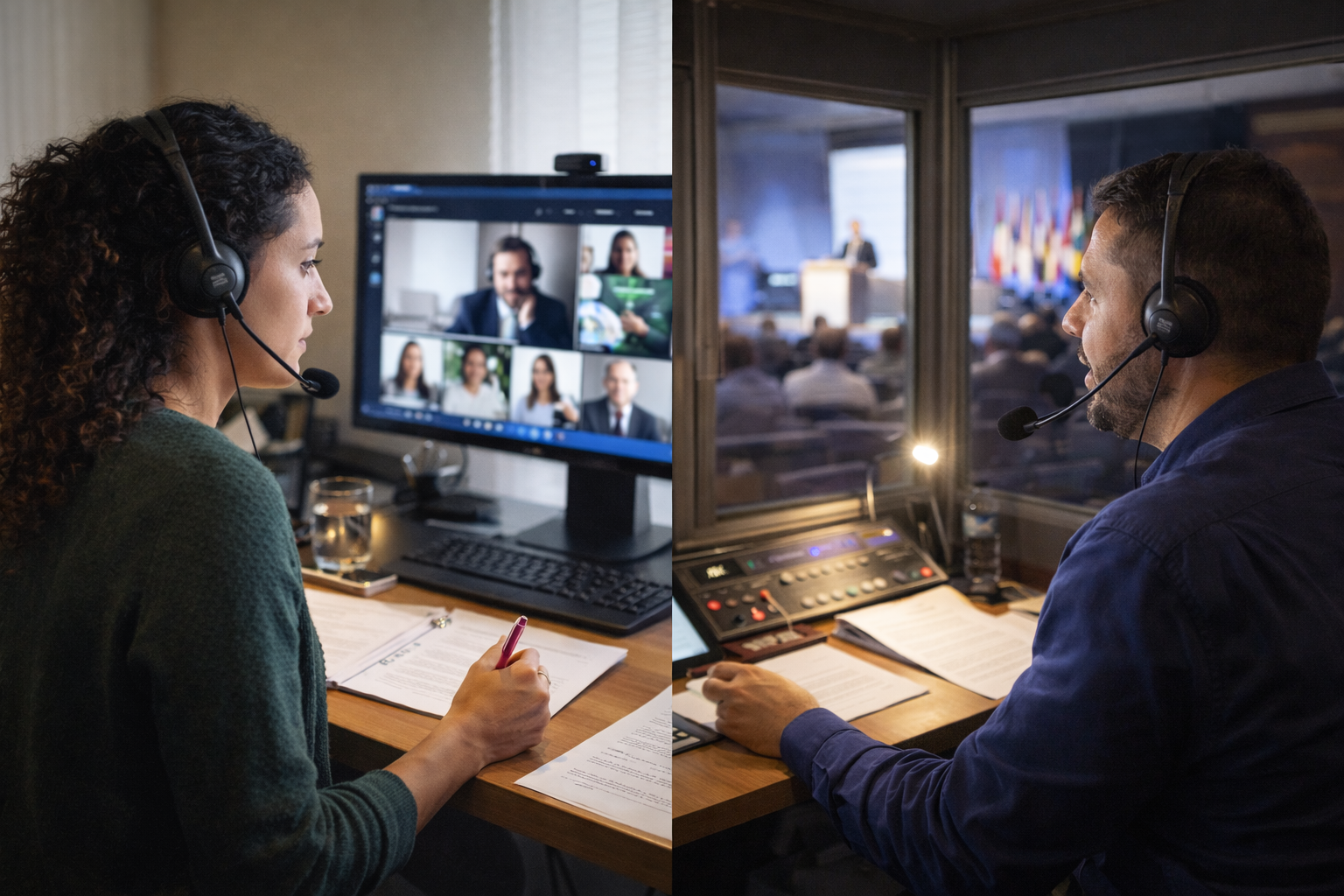
One of the most common questions we get is simple:
“What’s the best setup for interpretation?”
The honest answer is — it depends on the room, the audience, and the goal of the meeting.
There isn’t one “best” format. There are three strong ones. The key is matching the format to the function.
From an operations standpoint, here’s where each one works best.
1. Virtual Interpretation
Best for: informational meetings, multi-location audiences, structured presentations
Virtual interpretation works exceptionally well when:
- Participants are joining from different locations
- The meeting is presentation-focused
- Interaction is controlled or moderated
- Travel budgets are limited
Virtual platforms today allow for seamless language channels, making it easy for participants to select their language and follow along in real time.
It’s efficient, scalable, and ideal for:
- Webinars
- Remote trainings
- Info Sessions
- Multi-state or international meetings
- Organizations with distributed teams
When properly tested in advance, virtual interpretation is clean, accessible, and highly effective.
2. In-Person with a Booth
Best for: conferences, large audiences, high-stakes events
The traditional interpreter booth is the gold standard for larger or more formal events.
It works best when:
- There are 50+ attendees
- An AV team is on site and can provide a dedicated audio line
- Audio quality must be pristine
- Sessions are fast-paced
- Multiple languages are involved
Booths create sound isolation, which protects both the interpreter and the audience. That isolation allows interpreters to maintain clarity, speed, and accuracy throughout long sessions.
This format is ideal for:
- Conferences
- Corporate summits
- Government forums
- Annual meetings
- Large nonprofit events
When people think of professional conference interpretation, this is usually what they’re picturing.
3. In-Person with Portable Receivers
Best for: smaller meetings, site visits, flexible spaces, limited audio
Portable systems are one of the most versatile tools in language access.
They’re ideal when:
- The group is smaller
- The room doesn’t allow for a booth
- The setting needs mobility & flexibility
- There is no audio feed that can go directly into a booth
- Setup time is limited
With portable transmitters and receivers, participants can listen through headsets while staying fully engaged in the room.
This format works well for:
- Workshops
- Community meetings
- School events
- Site tours
- Mid-size board or advisory meetings
It offers flexibility without sacrificing professionalism.
Format Should Match the Experience You Want to Create
The question isn’t which format is “better.”
The real question is:
What kind of experience are you designing for your audience?
If the goal is reach and efficiency, virtual may be the right choice. If the goal is precision and scale, booths shine. If the goal is flexibility and interaction, portable systems often fit best.
When interpretation format is aligned with meeting design, communication flows naturally — and participants focus on the content, not the logistics.
At Dynamics Multilingual Services, we help clients choose the setup that fits their space, audience, and goals — because the right format makes everything else easier.