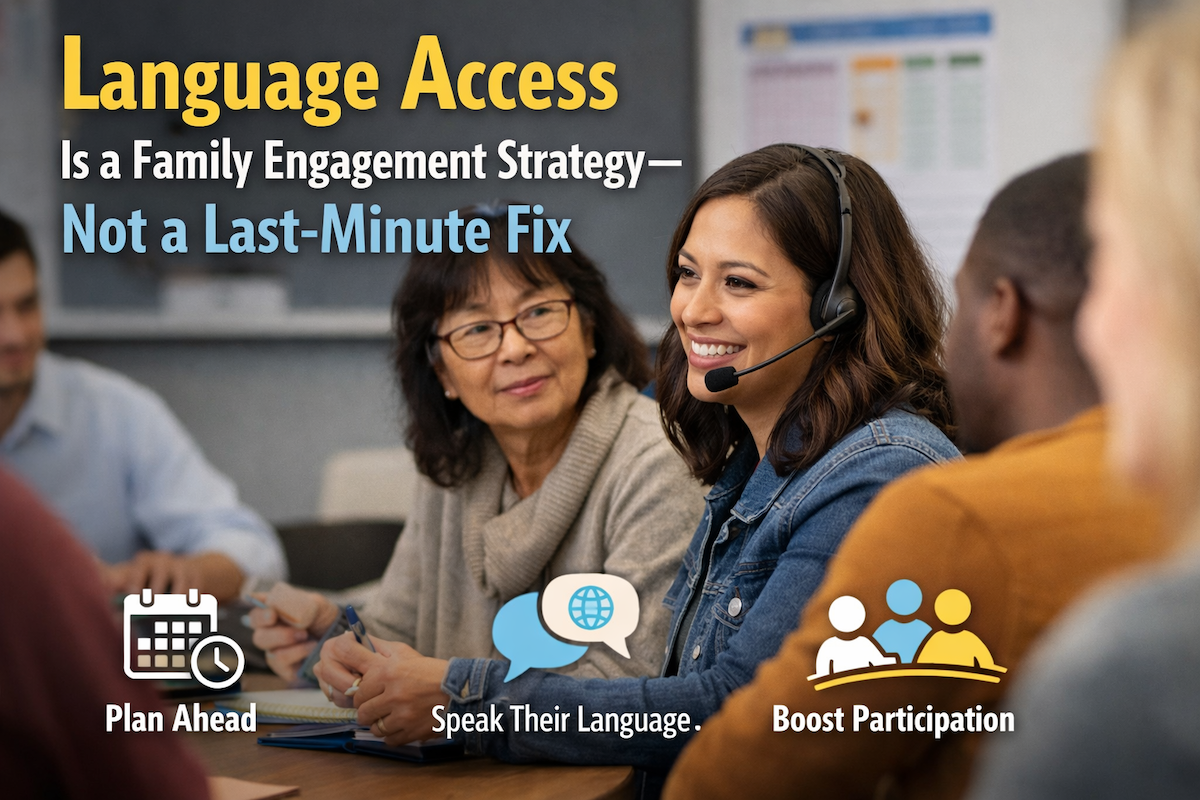
A lot of schools do great work creating family meetings, workshops, and info sessions.
But there’s one thing that still gets handled last minute more often than it should: interpretation.
Usually it goes like this — the meeting is already on the calendar, families are invited, and then someone asks, “Do we need an interpreter?”
By then, the goal isn’t really engagement anymore. It’s just trying to make it work.
Families Can Tell When Language Access Is an Afterthought
When interpretation is added late, things feel rushed:
- Meetings start late
- Interpreters don’t have enough context
- Families hesitate to ask questions
- Participation stays low
Even if the intention is good, the experience doesn’t feel welcoming.
On the flip side, when interpretation is planned ahead of time, families feel it right away. The meeting runs smoothly, communication is clear, and people actually participate.
Engagement Isn’t Attendance — It’s Participation
Most multilingual families want to be involved. The issue usually isn’t interest.
It’s access.
True family engagement means:
- Parents understand what’s being shared
- They feel comfortable asking questions
- They can follow up after the meeting
- They don’t feel like they’re “catching up”
Interpretation makes the difference between sitting in a room and actually being part of the conversation.
Planning Ahead Makes Everyone’s Life Easier
From an operations standpoint, planning language access early saves time and stress.
Schools that plan interpretation in advance:
- Avoid last-minute scrambling
- Stay on budget
- Reduce confusion around scheduling
- Keep meetings on track
This matters even more during busy seasons like spring board meetings, enrollment periods, and family workshops.
The Schools That Do This Best Treat Language Access Like Infrastructure
The schools that don’t struggle with this aren’t doing anything fancy.
They just:
- Know which meetings always need interpretation
- Use the same process each time
- Work with partners who understand school environments
When language access is consistent, it stops being a problem to solve and becomes part of how the school operates.
A Simple Question to Ask Before Every Meeting
Instead of asking, “Do we need interpretation for this?” Try asking, “Who are we trying to reach — and can they fully participate?”
That shift alone changes how family engagement shows up.